Higher Maths For Children (Updating...)
This page concludes almost all I have already taught or played with Danny, a Grade-2 student in primary school.
Group theory
1. Groups of integers:
Primes and Groups.
- What are primes? What are primes less than 100?
- Groups $\textcolor{purple}{\mathbb{Z}}$,$\textcolor{purple}{\mathbb{Z}_p}$,$\textcolor{purple}{\mathbb{Z}_p^*}$. Identities and Inverses. Commutativity.
- Primitive elements (aka. generators) in $\textcolor{purple}{\mathbb{Z}_p^*}$. (Try $p = 5,7,11,13,17,19$.)
- *Quandratic residue, Legendre symbol.
2. Dihedral groups and Platonic solids:
Group of Symmetries, Regular n-gons and polyhedrons.
- Geometry of Triangles: Regular Triangles and its angles ($60^{\circ}$). PDF
- $\textcolor{purple}{\textbf{D}_3}$ with its multiplication table. This is the first non-commutative group! PDF
- Angles, n-gons and circles.
- There are ONLY 5 regular polyhedrons. See: https://gogeometry.com/solid/platonic-solids-html5-animation-ipad-nexus-7.htm
- Euler characteristics: $\chi = V-E+F = 2$ for all polyhedrons.
Linear algebra and General linear group
1. First look at matrix
Matrix from and for solving equations.
- Identity matrix: $$I = \begin{bmatrix} 1 & 0 \\ 0 & 1 \end{bmatrix}$$
- Symmetric matrix: $$A = \begin{bmatrix} 2 & 3 \\ 3 & 5 \end{bmatrix}$$ or $$B = \begin{bmatrix} -1 & 4 \\ 4 & 2 \end{bmatrix}$$
- Echelon matrix: $$C = \begin{bmatrix} 1 & 2 \\ 0 & 3 \end{bmatrix}$$ or $$D = \begin{bmatrix} 2 & 1 \\ 0 & -4 \end{bmatrix}$$
- Upper/lower triangle matrix: Upper trangle matrix $$U = \begin{bmatrix} 3 & 2 \cr 0 & 4 \end{bmatrix}$$ and Lower trangle matrix $$L = \begin{bmatrix} 2 & 0 \cr 1 & 3 \end{bmatrix}$$
2. Vectors
I will introduce the vectors from Euclidean space $\mathbb{R}^2$.
Let’s start from a game or Brick Breaking Game !
- Dimensions: points, lines, planes, cubes.
- What are real numbers $\mathbb{R}$? Do they form a group? What are the Real number line ($\mathbb{R}$) and Cartesion plane/Cartesion coordinate system ($\mathbb{R}^2$)? Axis and Quandrants.
- Review: parallelogram rule for vector addition. (from the experiments of Force Theory.)
- Draw a vector in $\mathbb{R}^2$ from the original point $(0,0)$. How many number do we need to describe it? How can we ADD two vectors as arrays, and does it match the Parallelogram rule? Translation of vectors and how to calculate a vector beginning at any location.
- What is the module of a vector? (= absolute value for 1-dimensional case!) \textbf{Pythagorean theorem.} Can you imply the inequality $|a+b|\leq |a|+|b|$ (Triangular inequality) from the Parallelogram rule (view of geometry)?
3. Vectors and Linear combinations (Equations)
I will introduce the vectors from Euclidean space $\mathbb{R}^2$.
1. Unknowns. 2. System of two linear equations with two unknowns and the linear combianations of vectors.4. Visualization of matrices as linear transformation
Matrix and vectors, linear transformation.
1. Multiplications of elementary matrices and vectors:- Identity matrix: $$ I = \begin{bmatrix} 1 & 0 \\ 0 & 1 \end{bmatrix} $$
- Symmetric matrix: $$ A = \begin{bmatrix} 0 & 1 \\ 1 & 0 \end{bmatrix} $$.
- Echelon matrix: $$ B = \begin{bmatrix} 1 & 1 \\ 0 & 1 \end{bmatrix} $$, $$C = \begin{bmatrix} 1 & 0 \\ 1 & 1 \end{bmatrix}$$, or $$D = \begin{bmatrix} 1 & -1 \\ 0 & 1 \end{bmatrix}$$, $$E = \begin{bmatrix} 1 & 0 \\ -1 & 1 \end{bmatrix}$$
Visualisation:
Determinant and Area:
- Area of squares, rectangles and parallelograms.
- $Det: M_2(\mathbb{R}) \to \mathbb{R}$
Maths Games for Chindren
All work and no play makes Jack a dull boy. All play and no work makes Greg a playboy.
https://virtualmathmuseum.org/
Trivial Pursuit
The Monty-Hall Problem
https://montyhallinteractive.github.io/
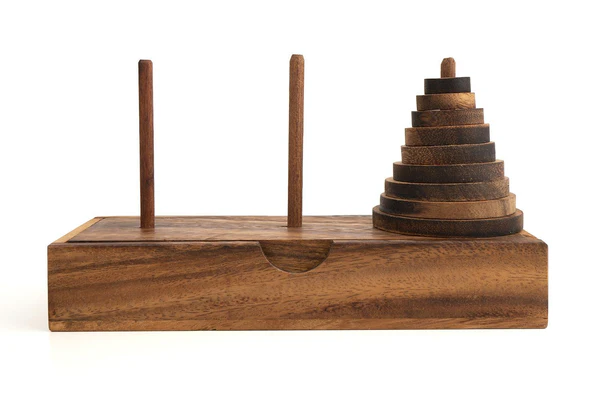
Tower of Hanoi
Minimum Moves, Mathematical induction. https://mathsamoi.fr/?p=926
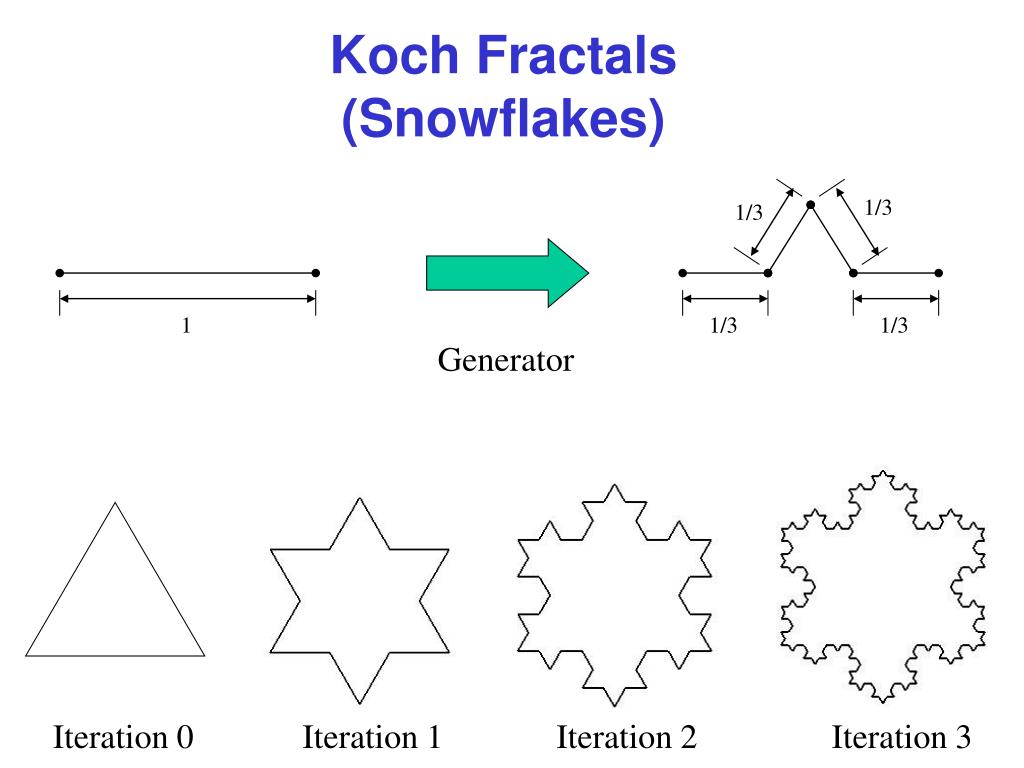
Koch Snowflake (to introduce Rational numbers)
https://mathworld.wolfram.com/KochSnowflake.html
Area and Circumference.
(Number of sides, Side length, Perimeter length)
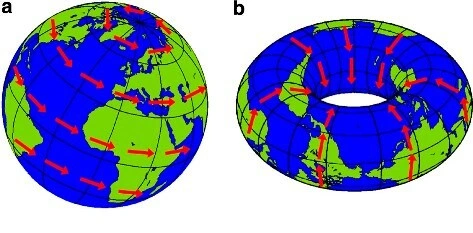
Hairy Ball Theorem (and Hairy Torus)

Weekday calendar puzzle
Version 1-4:
- ALL: https://keiichiw.github.io/a-puzzle-a-day-solver/
- No weekday 1, multiple hints: https://www.puzzleadaysolver.com/solver
- No weekday 2, multiple solutions: https://joinker.oss-cn-shanghai.aliyuncs.com/calendar-puzzle-solver/
Version 5: https://mi4i0.github.io/calendar-puzzle/
Version 6: https://mathgsi.com/tools/calendar_puzzle.html
mini: https://www.calendar-puzzle.com/
Number Games
(1) Kaprekar’s Constant (k=4)
Applying the Kaprekar routine to 4-digit number reaches 0 for exactly 77 4-digit numbers, while the remainder give 6174 in at most 8 iterations. The value 6174 is sometimes known as Kaprekar’s constant (Deutsch and Goldman 2004).
(2) 3x+1 Conjecture
Take any positive integer n and apply the following function repeatedly:
- If n is even → n/2
- If n is odd → 3n + 1
The conjecture states that no matter what starting value you choose, you will always eventually reach the cycle 4 → 2 → 1 → 4 …, and in particular reach the number 1.
Draw a Pie Chart of 24h in one day.
Draw functions y=f(x) on x-y plane.
$$f(x) = x, 2x, x^2, 2^x, sin(x), cos(x)$$.
Sum up from 1 to 100.
Higher Maths For Children (Updating...)
http://jules-zhu.github.io/danny/GroupTheoryForChildren.html